
TerM life insurance
Protect the People
Who Depend on You Most.
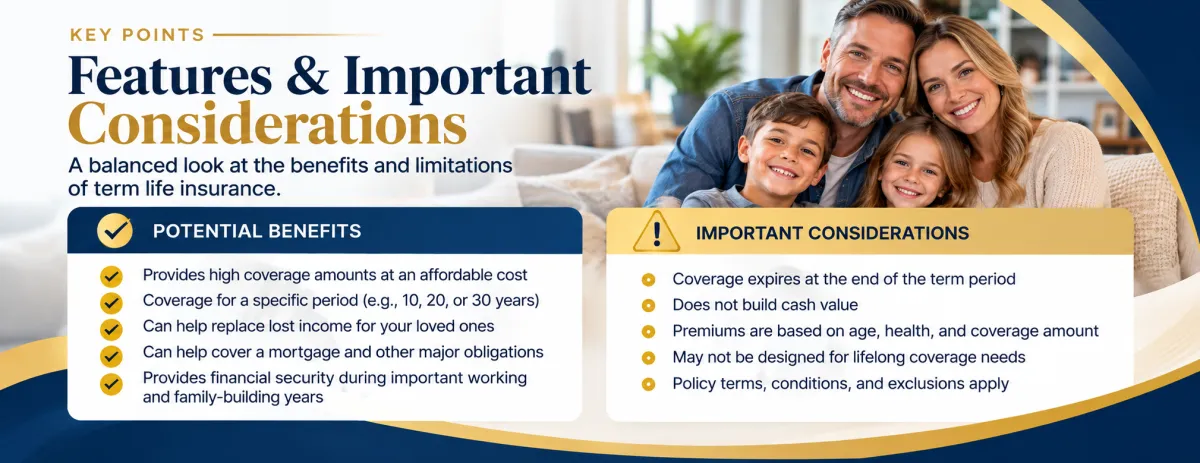
Term life insurance provides affordable coverage for a specific period of time, helping protect your loved ones financially if you pass away while the policy is in force.
It can be a practical option for families who want meaningful protection during important years—such as while raising children, paying a mortgage, replacing income, or managing other financial responsibilities.

Learn Before You Decide.
Understand Your Options Before Choosing Coverage.
Term life insurance can vary by carrier, coverage amount, term length, eligibility, and policy features. Take time to understand how your coverage works, ask questions, and review your options before making a decision.

Learn your options.

Ask questions.

Make an informed decision.
Understanding the basics
What Is Term Life Insurance?
Straightforward protection for a specific period of time.
Term life insurance provides coverage for a set period, such as 10, 20, or 30 years. If the insured passes away while the policy is in force, the death benefit can help loved ones manage financial responsibilities such as a mortgage, household expenses, debts, education costs, or lost income.
COMMON NEEDS
What Can It Help Protect?
The death benefit can help your beneficiaries manage important financial responsibilities if you pass away while your term coverage is in force.

The death benefit can be used by your beneficiary for:




Common situations
Who may consider final expense coverage?
Final expense insurance may be worth exploring if you:




Common Questions
Frequently Asked Questions
Quick answers to help you understand more.
How long does term life insurance last?
Term life insurance provides coverage for a specific period, commonly 10, 20, or 30 years. Available term lengths vary by carrier, age, and product.
How are premiums determined?
Premiums are generally based on factors such as age, health, coverage amount, term length, tobacco use, and the policy selected.
What can the death benefit be used for?
Beneficiaries generally have flexibility in how they use the death benefit, including household expenses, mortgage payments, debts, education costs, or other financial needs.
How much coverage should I consider?
The appropriate amount depends on your individual needs, including income replacement, debts, mortgage obligations, family expenses, education goals, and existing financial resources.
What can the death benefit be used for?
The beneficiary generally receives the death benefit and can use the proceeds for funeral or burial costs, outstanding bills, medical expenses, or other financial needs.
Does term life insurance build cash value?
Generally, no. Traditional term life insurance is designed primarily to provide death-benefit protection for a specified period rather than to accumulate cash value.
Will my premium stay the same?
Many term policies offer level premiums for the selected term period. What happens after that period varies by policy, so reviewing the policy terms is important.
What happens when my term ends?
Depending on the policy, coverage may end, continue at higher rates, or offer renewal or conversion options. Available options vary by carrier and policy.

Contact Us
Michael Cornick Jr.
Real Needs Secured LLC
129 Rockaway Avenue
Valley Stream, NY 11580
Office: 1(646)859-0437
Email: [email protected]
Real Needs Secured LLC
Protect Who Matters Most Today.
Helping individuals and families understand life insurance options and make informed protection decisions.
Explore
Learn Before You Decide
Our Blog
Request Information
© 2026 Real Needs Secured LLC. All rights reserved.
Michael Cornick Jr. is a New York-licensed independent Life, Accident and Health Insurance Agent. Product availability, eligibility, rates and coverage are subject to carrier underwriting and applicable policy terms. Information on this website is provided for general educational purposes only and does not constitute tax, legal or investment advice.