

EXPLORE RNS FAQ's:
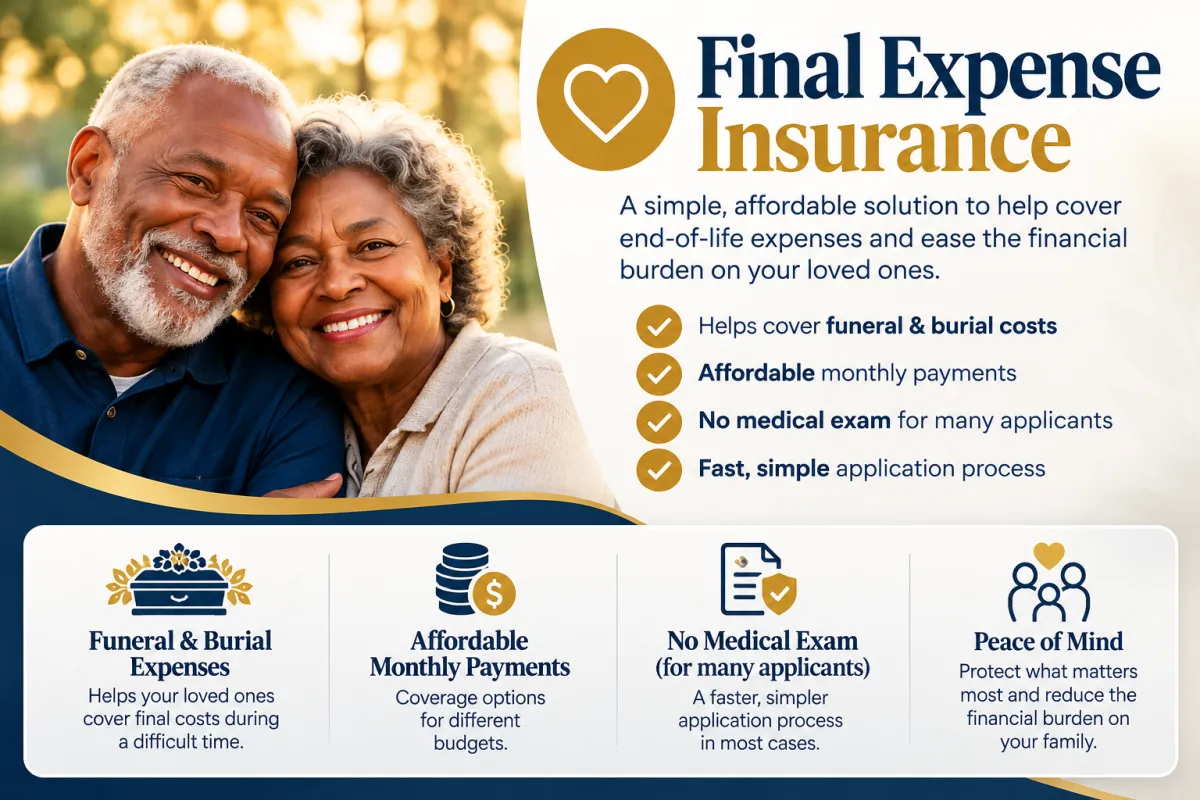
Do I need a medical exam?
In many cases, no medical exam is required. You may be asked health questions, and eligibility depends on the insurer and policy.
How are premiums determined?
Premiums are generally based on factors such as your age, health, coverage amount, and the policy you select.
How quickly does coverage begin?
It depends on the policy. Some policies may provide full benefits immediately, while others may include a graded or limited benefit period.
How much coverage can I get?
Coverage amounts vary by insurer, age, health, and the specific policy. Final Expense policies generally offer smaller benefit amounts than traditional life insurance.
What can the death benefit be used for?
The beneficiary generally receives the death benefit and can use the proceeds for funeral or burial costs, outstanding bills, medical expenses, or other financial needs.
What is a graded benefit?
A graded benefit limits the full death benefit during an initial period specified by the policy. The exact benefit and timeframe depend on the policy terms.
Will my rates increase?
Many Final Expense policies have premiums designed to remain level, but this depends on the specific policy. Review the policy terms before purchasing coverage.
Is Final Expense insurance the same as a prepaid funeral plan?
No. Final Expense insurance is life insurance that pays a death benefit to the beneficiary according to the policy. A prepaid funeral plan is generally an arrangement made directly with a funeral provider.

How long does term life insurance last?
Term life insurance provides coverage for a specific period, commonly 10, 20, or 30 years. Available term lengths vary by carrier, age, and product.
How are premiums determined?
Premiums are generally based on factors such as age, health, coverage amount, term length, tobacco use, and the policy selected.
What can the death benefit be used for?
Beneficiaries generally have flexibility in how they use the death benefit, including household expenses, mortgage payments, debts, education costs, or other financial needs.
How much coverage should I consider?
The appropriate amount depends on your individual needs, including income replacement, debts, mortgage obligations, family expenses, education goals, and existing financial resources.
What can the death benefit be used for?
The beneficiary generally receives the death benefit and can use the proceeds for funeral or burial costs, outstanding bills, medical expenses, or other financial needs.
Does term life insurance build cash value?
Generally, no. Traditional term life insurance is designed primarily to provide death-benefit protection for a specified period rather than to accumulate cash value.
Will my premium stay the same?
Many term policies offer level premiums for the selected term period. What happens after that period varies by policy, so reviewing the policy terms is important.
What happens when my term ends?
Depending on the policy, coverage may end, continue at higher rates, or offer renewal or conversion options. Available options vary by carrier and policy.
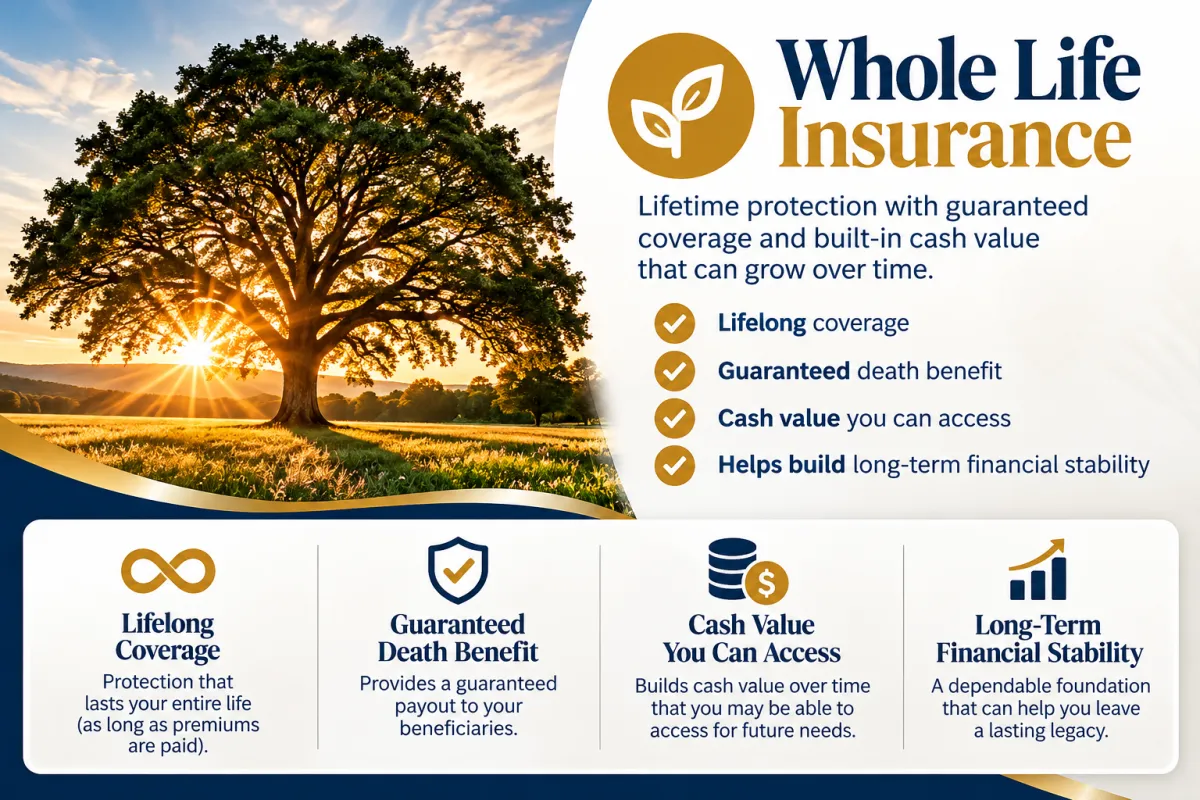
How long does term life insurance last?
Term life insurance provides coverage for a specific period, commonly 10, 20, or 30 years. Available term lengths vary by carrier, age, and product.
How are premiums determined?
Premiums are generally based on factors such as age, health, coverage amount, term length, tobacco use, and the policy selected.
What can the death benefit be used for?
Beneficiaries generally have flexibility in how they use the death benefit, including household expenses, mortgage payments, debts, education costs, or other financial needs.
How much coverage should I consider?
The appropriate amount depends on your individual needs, including income replacement, debts, mortgage obligations, family expenses, education goals, and existing financial resources.
What can the death benefit be used for?
The beneficiary generally receives the death benefit and can use the proceeds for funeral or burial costs, outstanding bills, medical expenses, or other financial needs.
Does term life insurance build cash value?
Generally, no. Traditional term life insurance is designed primarily to provide death-benefit protection for a specified period rather than to accumulate cash value.
Will my premium stay the same?
Many term policies offer level premiums for the selected term period. What happens after that period varies by policy, so reviewing the policy terms is important.
What happens when my term ends?
Depending on the policy, coverage may end, continue at higher rates, or offer renewal or conversion options. Available options vary by carrier and policy.
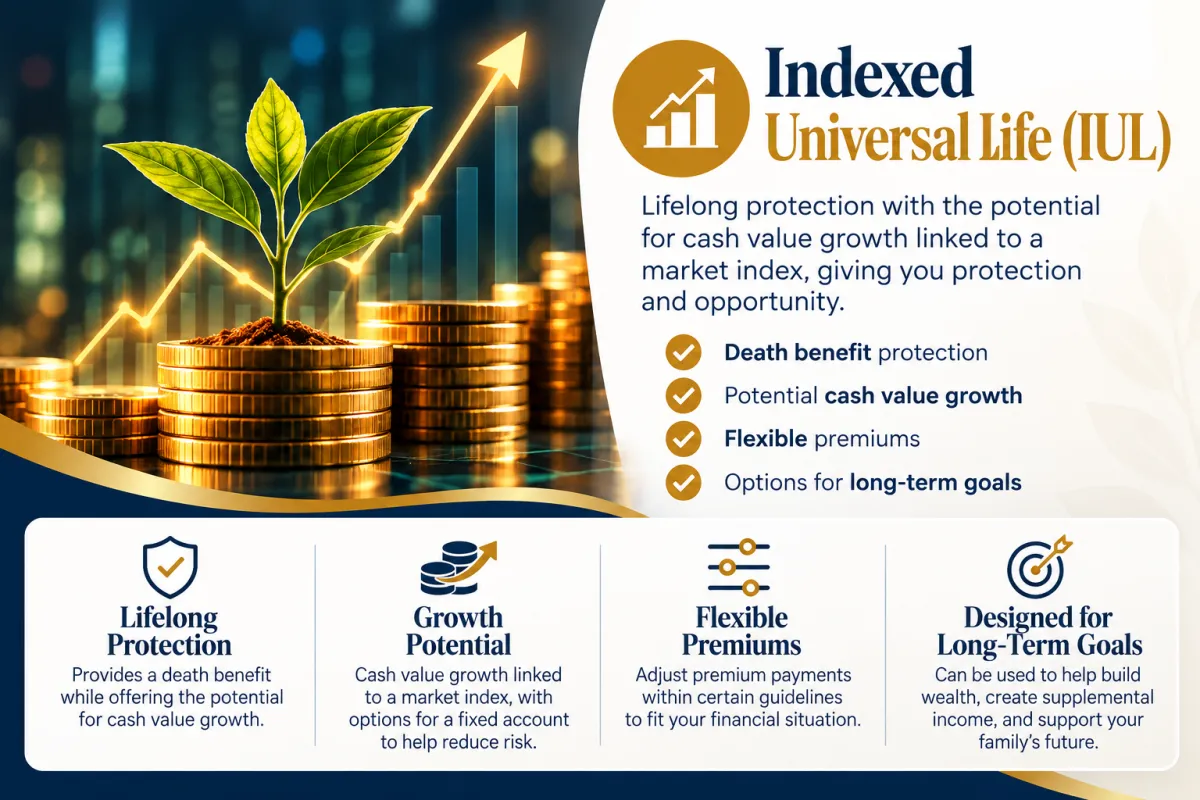
What is Indexed Universal Life (IUL) insurance?
Indexed Universal Life is a type of permanent life insurance designed to provide a death benefit while also offering the potential to build cash value. Interest credited to the cash value may be linked to the performance of a market index, subject to the policy’s terms and limitations.
How does an IUL build cash value?
After policy charges and expenses are deducted, a portion of the premium may contribute to cash value. Interest may then be credited based on an index-crediting strategy or other available account options, subject to factors such as caps, participation rates, spreads, and floors.
Is an IUL directly invested in the stock market?
No. An IUL does not directly invest your policy’s cash value in the stocks or securities that make up an index. The index is used as a reference for determining potential interest credits according to the policy’s crediting rules.
What can the death benefit be used for?
Beneficiaries can generally use life insurance proceeds for a variety of needs, including income replacement, mortgage or housing expenses, education costs, debts, final expenses, or other financial priorities.
How are IUL premiums determined?
Premiums and policy funding depend on factors such as age, health, coverage amount, policy design, underwriting, and the selected benefits. Because IUL is flexible-premium insurance, adequate funding and ongoing policy monitoring are important.
Can I access the policy’s cash value?
Generally, yes. Available cash value may be accessed through withdrawals or policy loans, subject to policy provisions. Loans and withdrawals can reduce cash value and the death benefit and may have tax consequences or increase the risk of policy lapse.
What are the key risks or limitations of an IUL?
IUL policies include insurance costs, fees, and other charges, and credited interest is not guaranteed beyond applicable policy guarantees. Caps, participation rates, spreads, and other crediting terms can change, and insufficient funding or poor policy performance can affect cash value and the policy’s ability to remain in force.
Is an IUL appropriate for retirement planning?
An IUL can be used as part of a broader long-term financial strategy because it may accumulate cash value that can potentially be accessed later. However, it is life insurance first, not a retirement account, and suitability depends on your protection needs, funding ability, time horizon, policy performance, and other financial resources.

Contact Us
Michael Cornick Jr.
Real Needs Secured LLC
129 Rockaway Avenue
Valley Stream, NY 11580
Office: 1(646)859-0437
Email: [email protected]

Real Needs Secured LLC
Protect Who Matters Most Today.
Helping individuals and families understand life insurance options and make informed protection decisions.
© 2026 Real Needs Secured LLC. All rights reserved.
Michael Cornick Jr. is a New York-licensed independent Life, Accident and Health Insurance Agent. Product availability, eligibility, rates and coverage are subject to carrier underwriting and applicable policy terms. Information on this website is provided for general educational purposes only and does not constitute tax, legal or investment advice.